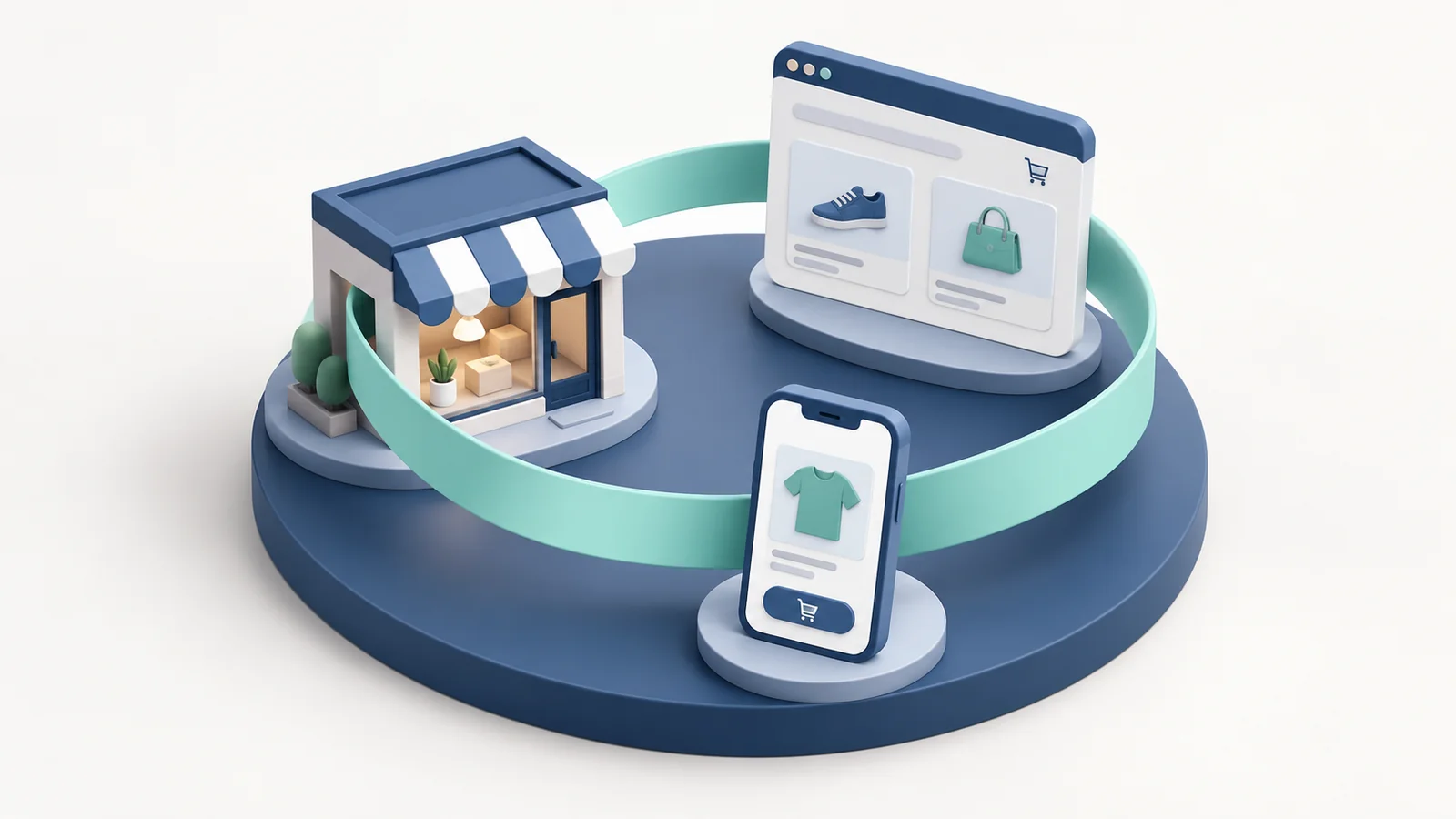
A customer might find a jacket on your website, try it on in your store, and buy it later from their phone. From their perspective, that’s one shopping journey. They expect their saved products, loyalty benefits, and order information to follow them.
That’s the practical goal of omnichannel retail: making your channels work together as one customer experience. A mobile app can give returning shoppers a convenient place to access that experience, from checking stock to using a reward or managing an order.
Adding an app doesn’t create those connections by itself. This guide looks at where the app can help, what needs to stay consistent, and how to avoid giving your team another disconnected storefront to manage.
The App’s Role in Omnichannel Ecommerce
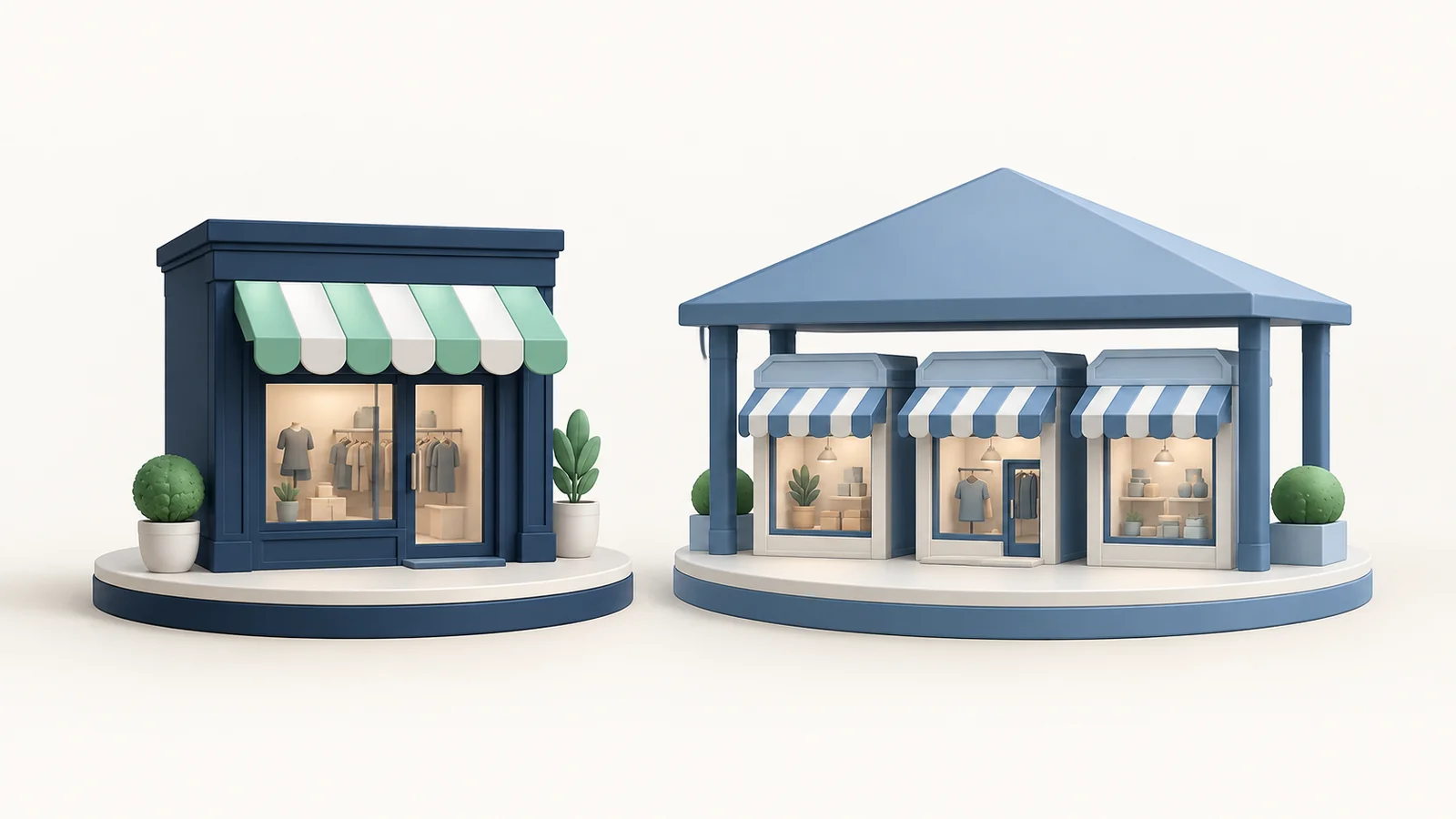
Your website remains the broadest digital storefront. It attracts shoppers through search, ads, social media, referrals, and direct links without asking them to install anything.
The app serves a narrower audience. It’s usually strongest for existing customers, loyalty members, subscribers, regular buyers, and people with a clear reason to stay close to the brand.
Within an omnichannel system, the app can act as:
- A fast shopping channel for repeat customers.
- A loyalty card and account hub.
- A bridge between stores and digital activity.
- A destination for links from email, SMS, QR codes, and push.
- A place to store preferences, wishlists, order history, and service information.
Those functions become much more useful when they recognize the same customer. A reward earned in-store should still be there when that shopper opens your app at home.
Keep Customer Identity Consistent
The customer should have one account across your website and app.
Orders, addresses, payment options, preferences, loyalty status, subscriptions, saved products, and support history should remain available wherever they interact. Requiring a new app-specific account breaks the relationship into separate records and makes personalization less reliable.
Persistent sign-in is one of the app’s practical advantages. Once a customer identifies themselves, the app can make future visits faster and connect behavior that may be anonymous on mobile web.
That data still needs appropriate consent, security, and governance. Omnichannel identity should make the experience more useful, not become an excuse to collect everything available.
Connect the Website and App
Customers will move between your website and app. Treat that as normal.
A shopper may discover a product through search, browse the website, install after purchase, receive a back-in-stock push, and complete the next order in-app. Another may browse in the app and finish on desktop.
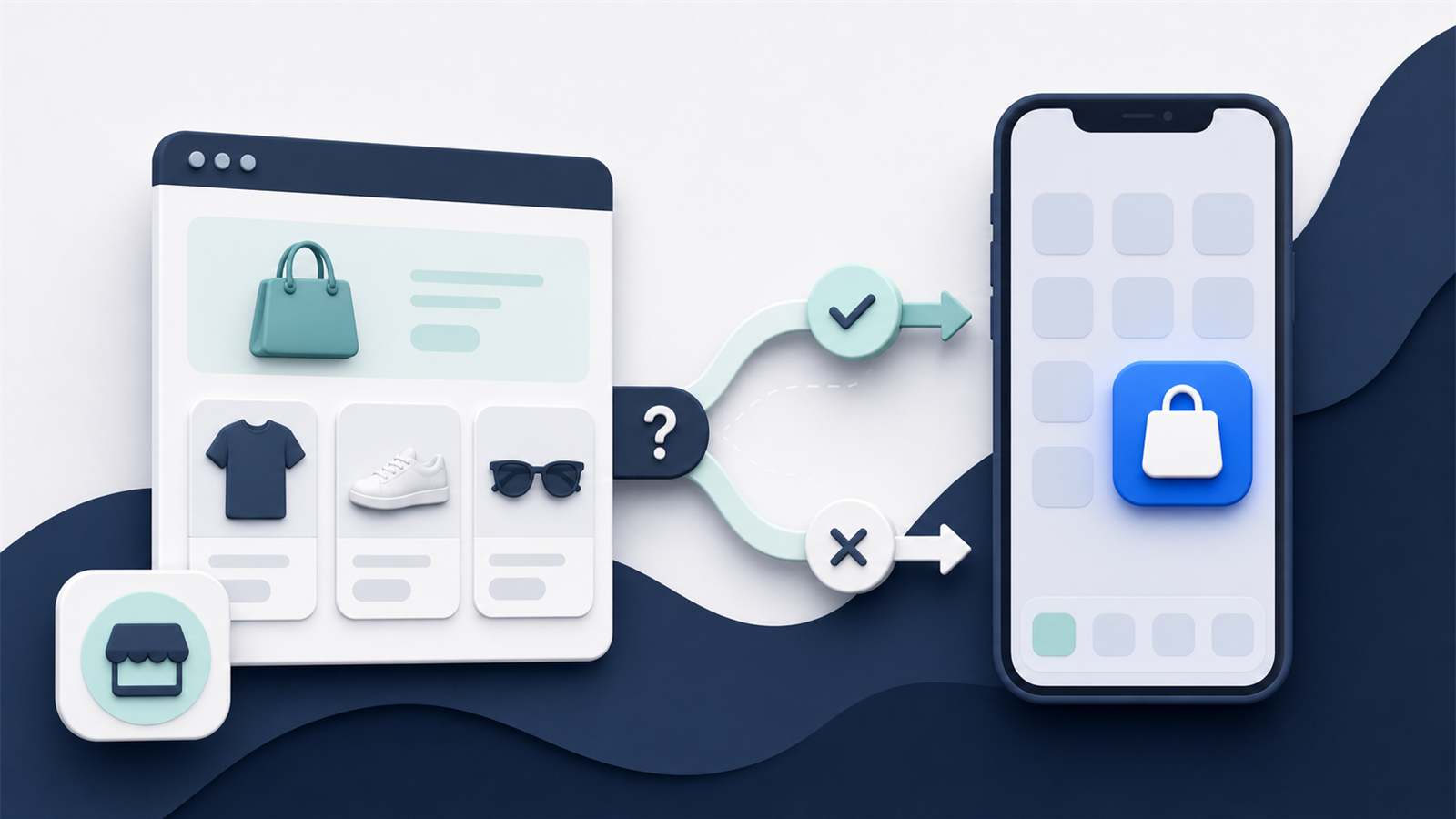
Deep links should take customers from emails, SMS messages, ads, and web pages to the relevant app screen when the app is installed, with a sensible web fallback when it isn’t.
Product information, inventory, prices, promotions, checkout rules, and account features need to stay aligned. A saved basket is only useful if the products, offer, and delivery options are still correct when the customer resumes shopping.
Make the App Useful In-Store
For brands with physical locations, the app can connect store visits with the customer account.
Useful functions may include:
- A scannable loyalty card or membership ID.
- Store-specific inventory and pickup availability.
- Digital receipts and order history.
- Product scanning for more information, reviews, or variants.
- Saved products that can be revisited after the customer leaves.
- Store locators, appointments, events, or service bookings.
Start with the moments that remove a real inconvenience. Adding technology to the store journey without improving it creates work for customers and staff.
Train store teams on the app’s value and common problems. A QR code at the register is easier to explain when the app solves an immediate need: saving a receipt, finding another size, or accessing a loyalty reward.
Make Loyalty Work Across Online and In-Store Purchases
Loyalty is one of the clearest reasons for an existing customer to keep a retail app.
The app can show points, status, rewards, eligible offers, referrals, and upcoming benefits in one accessible place. It can also connect in-store and online earning so the program feels like one relationship rather than two balances.
The complete journey matters. Displaying points isn’t enough if customers can’t redeem rewards, apply them at checkout, or resolve a missing transaction.
Use the app to make loyalty easier to understand and use. A customer who has earned a reward shouldn’t have to work out which channel will accept it.
Give Each Messaging Channel a Job
Email, SMS, and push shouldn’t send the same campaign to the same customer at the same time.
Email is useful for richer storytelling and broad lifecycle communication. SMS provides high visibility for urgent or valuable messages but has a direct sending cost and a low tolerance for noise. Push provides direct app reach with no carrier fee per message, but only after the customer installs and opts in.
Use channel preference, urgency, customer behavior, and message type to decide where a communication belongs.
Push is particularly well suited to app-specific and timely events such as back-in-stock alerts, loyalty updates, order changes, price drops, abandoned carts, and early access. Deep link each message to the exact next step.
For example, an email might introduce your autumn collection while a push alerts one customer that the jacket they saved is back in stock. Klaviyo supports deep links in push messages, but your team still needs to connect that message to the correct product and coordinate it with other campaigns.
Connect Service and Post-Purchase Journeys
The app shouldn’t stop being useful after checkout.
Order tracking, returns, subscriptions, warranties, receipts, support conversations, and product guidance can all give customers a reason to reopen it.
These journeys also reduce pressure on customer service when customers can find accurate information and complete common tasks themselves.
Make escalation easy. If a customer needs help, pass the relevant account and order context into chat, email, or phone support rather than forcing them to explain the journey again.
Avoid Creating a Second Storefront
The operational risk is duplication.
If your team has to rebuild every campaign, collection, promotion, navigation change, and feature separately in the app, omnichannel consistency becomes expensive. The channels drift because keeping them aligned takes too much work.
Map what syncs automatically, what needs app-specific treatment, and who owns each recurring task. App-specific content can be valuable, but it should be a deliberate use of the channel rather than the result of disconnected systems.
Measure Customers Across Channels
Channel revenue alone can hide the effect of omnichannel behavior.
Track whether app adopters increase total purchase frequency, spend, retention, loyalty activity, store visits, or self-service use. Compare website-only, app-only, store-only, and cross-channel customer cohorts where your identity and consent model allows it.
Some app revenue will be shifted from other channels. The stronger result is a customer who buys more often, stays longer, or has an easier experience across the business.
Build the Strategy Around Customer Moments
Start with the customer journey rather than a feature list.
Identify moments where the app can remove friction or connect disconnected channels: joining loyalty in a store, checking stock before visiting, continuing a saved basket, receiving a relevant inventory alert, showing a membership card, managing an order, or reordering a regular purchase.
Choose a small number of high-value moments for launch. Add more after the foundations work and customers are using them.
The Bottom Line
An ecommerce app fits an omnichannel strategy when it connects the relationship customers already have with your brand.
Keep identity, products, prices, loyalty, orders, and service consistent. Use deep links and thoughtful messaging to move customers between channels without making them start again.
For the shopper who discovered a jacket online and tried it on in-store, success is simple: the right size is easy to find, their reward works, and they can see the order afterward. When your app makes those moments easier, it earns a lasting place in the relationship.