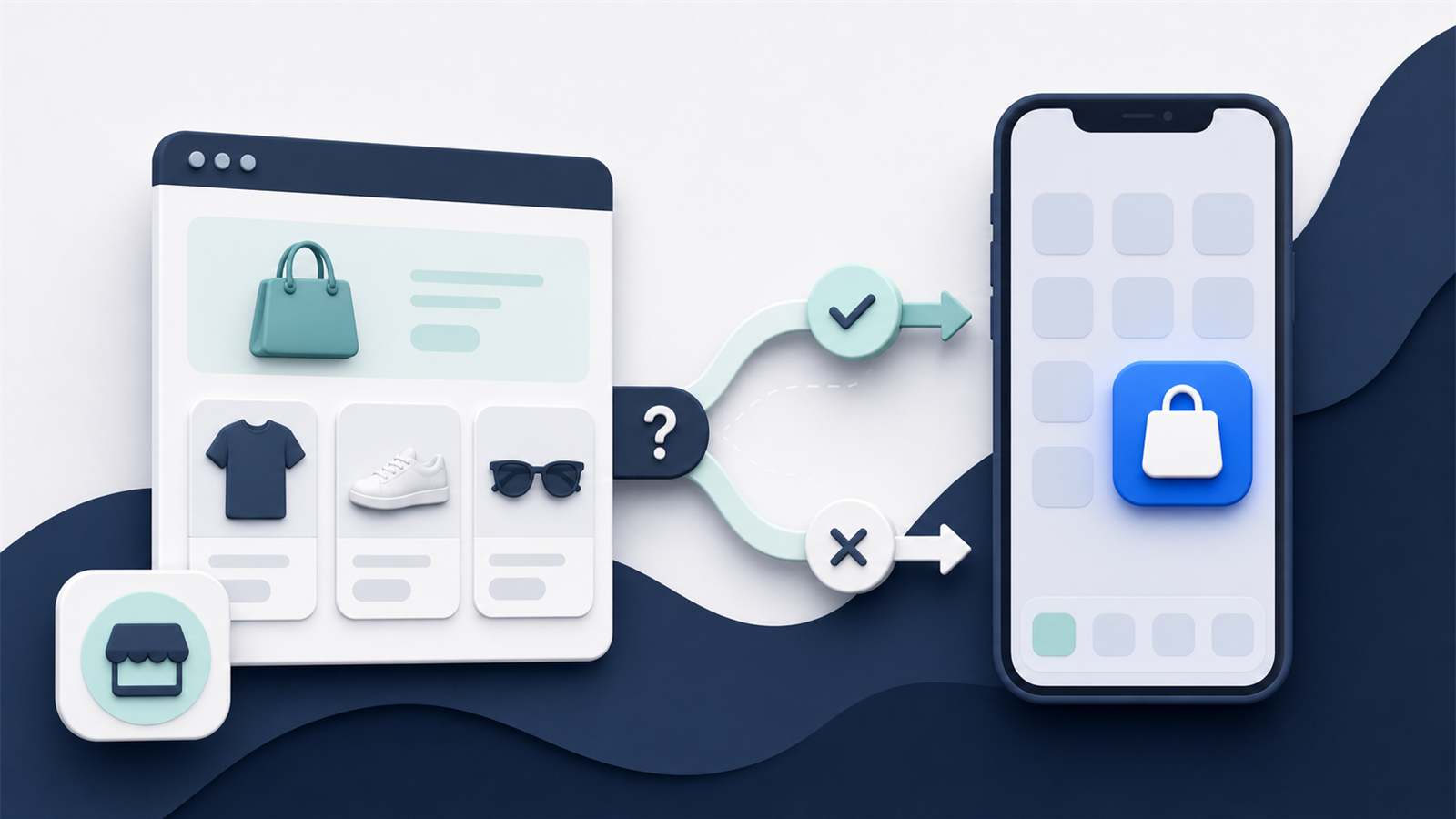
A customer might discover your products on Amazon without ever searching for your brand. Another might buy from you every month and want a faster way to reorder. A marketplace app and your own ecommerce app serve those customers in different ways.
A marketplace app, such as Amazon, Walmart, eBay, Etsy, or Shopify’s Shop app, gives your products access to an audience already shopping inside the platform. Your own app gives existing and high-intent customers a direct place to interact with your brand.
As a result, the marketplace is usually stronger for discovery and transaction volume. The branded app is stronger for control, first-party relationships, loyalty, and repeat engagement.
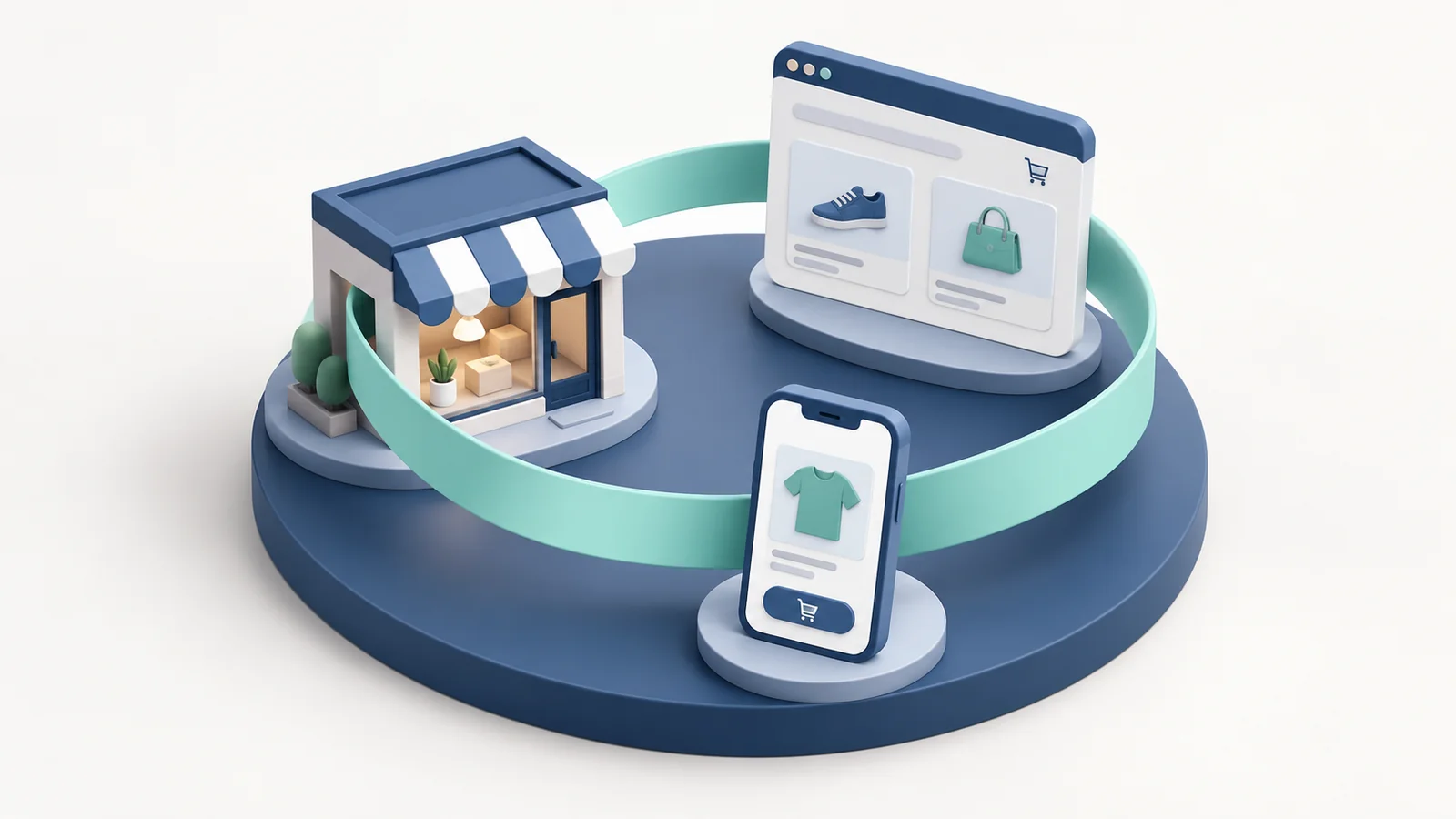
Many brands use both, and that often makes more sense than choosing one or the other. The important part is understanding which customer relationship each channel creates, then giving each one a clear role.
What Is a Branded Ecommerce App?
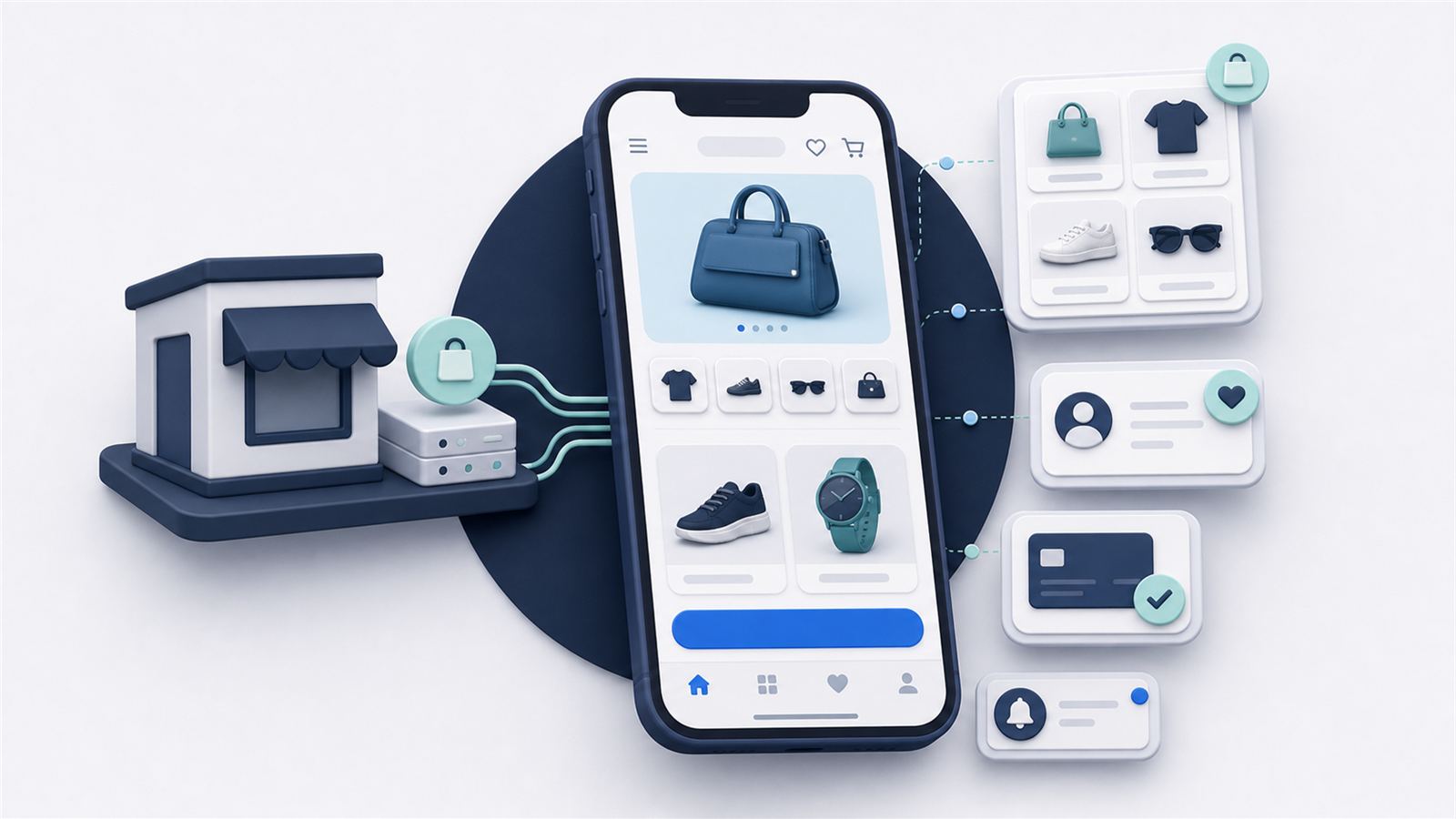
A branded ecommerce app is the retailer’s own iOS or Android application. The Nike app, for example, is a direct Nike channel. Customers open it to shop and interact with Nike, not to compare Nike products with dozens of competing brands.
It carries the brand’s store, account experience, content, loyalty, communication, and customer service. Customers download it specifically to interact with that business.
Because the app belongs to the retailer, the brand normally controls the developer accounts, app-store listing, design, product experience, customer data, messaging strategy, and roadmap, subject to Apple and Google policies.
That doesn’t make the app a standalone business. It still depends on the wider commerce stack, so products, prices, inventory, accounts, orders, checkout, and integrations need to remain consistent with the website.
What Is a Marketplace App?
A marketplace app works from the other direction. It brings products from many sellers into one customer experience.
Amazon and Walmart Marketplace are broad marketplaces covering a huge range of categories. Etsy focuses on original, handmade, vintage, and creatively sourced products, while eBay combines fixed-price listings with auctions across new and used goods.
Shopify’s Shop app is another relevant example, although its model is more store-led than Amazon’s. Customers can search for products and stores, browse a personalized feed, follow brands, save products, use Shop Pay, and track orders from different Shopify merchants in one place.
Customers open the marketplace to browse a category, compare options, use an existing account, and rely on the platform’s checkout, payment, delivery, review, or protection systems.
That gives the seller access to demand and infrastructure. In return, the marketplace controls more of the transaction, presentation, rules, data, and customer communication.
The exact balance varies by platform. Amazon may control much of the listing, checkout, fulfillment, advertising, and customer-service experience. Shop gives merchants more visible store identity and can keep more of the relationship connected to their Shopify storefront. Still, the underlying tradeoff is similar: the seller gains access to a shared shopping destination without fully controlling that destination.
Branded Apps and Marketplace Apps Compared
| Area | Your ecommerce app | Marketplace app |
|---|---|---|
| Customer intent | The customer chooses your brand | The customer may be choosing a category or product |
| Discovery | Requires your own promotion | Benefits from the marketplace audience and search |
| Experience control | High | Limited by marketplace templates and rules |
| Customer data | Direct first-party relationship, subject to consent | Often restricted or mediated by the platform |
| Competition | Your products and content | Competitors may appear beside your listing |
| Communication | Email, SMS, push, loyalty, and account channels you control | Communication follows marketplace rules |
| Costs | App setup, software, operations, and promotion | Marketplace commissions, advertising, service, and fulfillment charges may apply |
| Loyalty | Built around your brand | Often built around the marketplace |
Neither channel wins every category. Instead, they create different kinds of reach and control. That distinction becomes clearer when you look at how customers find and use each one.
Marketplace Apps Are Better at Discovery
Customers already use major marketplaces to search, compare, and buy. Someone looking for running shoes may open Amazon and compare Nike, Adidas, New Balance, and smaller brands in the same session. Someone looking for a handmade wedding gift may start on Etsy without knowing which seller they will eventually buy from.
The platform brings traffic, trust, saved payment details, reviews, and familiar fulfillment expectations to that search.
Together, those advantages can help a brand reach customers who would never search for its website or install its app.
However, that discovery comes with competition at the point of purchase. An Amazon product page can place sponsored alternatives, similar products, price comparisons, and marketplace recommendations around your listing. On Etsy or eBay, the customer can return to the search results and compare your product with many close alternatives in seconds.
That can weaken the connection between the customer and the seller. The customer may remember buying from the marketplace more clearly than buying from your brand.
Your App Is Better for the Direct Relationship
Your own app starts with a different level of intent. Someone who installs the Nike, Sephora, or ASOS app has made a deliberate choice to keep that retailer on their phone rather than beginning every shopping session in a multi-brand marketplace.
That choice gives you room to design the complete experience around your products, content, loyalty, services, and customer account. Push notifications can also bring opted-in customers back to a relevant product, reward, order, or event without depending on marketplace placement.
At the same time, you gain a clearer view of behavior inside your own channel, subject to privacy choices and the systems you implement.
None of this guarantees retention. The app still needs an ongoing reason to open and must deliver an experience at least as good as your website. Once that foundation is in place, though, the direct relationship gives you much more control over how the brand is presented.
How Much of the Shopping Experience Can You Control?
That difference in control is easiest to see in merchandising. Amazon and Walmart standardize product listings so customers can compare sellers. Etsy gives sellers more personality, but products still sit inside Etsy’s search, navigation, reviews, and checkout structure. The consistency helps each platform, but it limits how much of your brand experience you can express.
Your app, by comparison, can support richer merchandising, editorial content, product education, bundles, personalized navigation, loyalty status, and services tied to the customer account.
Of course, control also creates responsibility. Your team owns more design decisions, testing, content, measurement, and support. Those responsibilities feed directly into the economics of the channel.
Compare Marketplace Fees With App Operating Costs
Marketplace costs often follow sales or services used. An Amazon seller might pay referral fees, fulfillment and storage charges through FBA, and advertising costs to stay visible in competitive results. Etsy and eBay use their own combinations of listing, transaction, payment, promotion, and store fees. In other words, much of the cost rises with the volume or services the marketplace produces.
Your app has a different cost structure. It creates setup and recurring costs even before it produces a sale, including a builder or custom development, integrations, internal labor, maintenance, promotion, and app operations.
For that reason, compare contribution rather than revenue alone. A marketplace may produce more orders with a lower margin. A branded app may produce less reach but stronger repeat economics among existing customers.
Customer acquisition and retention costs belong in the comparison too. Marketplace demand isn’t free simply because the traffic already exists, and app push isn’t free if the brand had to spend heavily to acquire the customer first.
Once you look beyond the order itself, customer data and future communication become part of the economic picture.
Customer Data and Communication
Your own app can connect customer identity, purchase history, preferences, loyalty, and behavior across your systems when the customer consents and the implementation supports it.
Marketplaces may limit what seller data is available and how it can be used. An Amazon seller can see order and performance information inside Seller Central, for example, but can’t treat an Amazon buyer like a customer who signed up through the brand’s own store. Marketplaces may also restrict messages that move customers outside the platform.
Those limits protect the marketplace experience. At the same time, they make the seller more dependent on the platform for future reach.
The value of ownership isn’t collecting more data for its own sake. It comes from recognizing the customer, serving them consistently, and communicating within a relationship they chose to have with your brand. Over time, that consistency can shape where the customer prefers to shop.
Customers Build Habits Around Where They Shop
This is where the difference between channel access and customer loyalty becomes important. Customers tend to return to the place that makes shopping easiest.
In a marketplace, saved details, membership benefits, recommendations, and broad selection can reinforce loyalty to the platform. Prime members may begin with Amazon because delivery and payment are already familiar. Shop users may return to Shop to follow stores, check offers, use Shop Pay, and track orders across several brands. Your product may benefit from that habit without fully owning it.
In your app, the same principle works in your favor. Loyalty benefits, preferences, order history, services, and relevant communication can reinforce a direct habit with your brand.
That makes the app most useful for customers with a genuine reason to prefer the direct relationship. It doesn’t need to replace the marketplace for shoppers whose priority is broad comparison and consolidated convenience.
How the Channels Can Work Together
Because the channels solve different problems, they can support each other. A customer might discover a coffee, skincare, or apparel brand on Amazon, then later visit the brand’s website after seeing the packaging, searching for the company, or encountering it on social media. Your website, service, product quality, and wider brand experience can then create reasons for a direct relationship where marketplace rules allow it.
From there, your own app can serve customers who want loyalty, replenishment, exclusive access, deeper content, support, or a faster route back to the brand.
For this to work, keep the channel roles clear. Avoid undercutting partners or breaking marketplace policies. Decide which products, offers, services, and customer moments belong in each channel.
Measure the contribution each channel makes to the business as a whole. Marketplace sales and direct repeat orders may both be valuable, but the balance will depend on whether you need more new customers or a better way to serve existing ones.
When to Prioritize a Marketplace or Your Own App
The right priority depends on what the business needs next. A small homeware maker may get more immediate value from Etsy’s existing category demand than from asking customers to download a dedicated app. A consumer brand with a large Amazon business may continue using it for acquisition while building direct channels for repeat purchases.
In general, prioritize marketplaces when the brand needs discovery, category demand, transaction infrastructure, or access to customers who prefer the platform.
On the other hand, prioritize your own app when you have a meaningful base of repeat customers, a clear reason to install, strong owned promotion channels, and a plan to deepen the direct relationship.
For an early and relatively unknown brand, a marketplace may create value long before a dedicated app can earn enough adoption. As repeat customers and loyalty become more important, dependence on marketplace reach alone starts to leave strategic value on the table.
Final Thoughts
Marketplace apps help brands access demand. Your own ecommerce app helps you build and serve a direct customer relationship.
A marketplace can be valuable before enough customers know your brand to install its app. As your repeat customer base grows, an app can become a practical way to give those customers better service, easier reordering, or useful membership benefits.
For many brands, the strongest strategy uses both. The marketplace helps new customers find and trust the product, while the branded app gives your best customers a better reason to return directly. The key is staying clear about which channel owns each part of the customer experience.