An ecommerce mobile app is a branded shopping application that customers can download from the Apple App Store or Google Play Store.
It gives an ecommerce brand a permanent place on the customer’s phone, with a shopping experience built specifically for mobile devices.
Think Amazon, Sephora, Gymshark. There are thousands of brands today with their own mobile apps, giving their customers a way to skip the Google searches, skip the browser, and buy directly from their phone.
Keep reading and we’ll explain everything you need to know about ecommerce mobile apps, and how they might work for your brand.
How an Ecommerce Mobile App Works
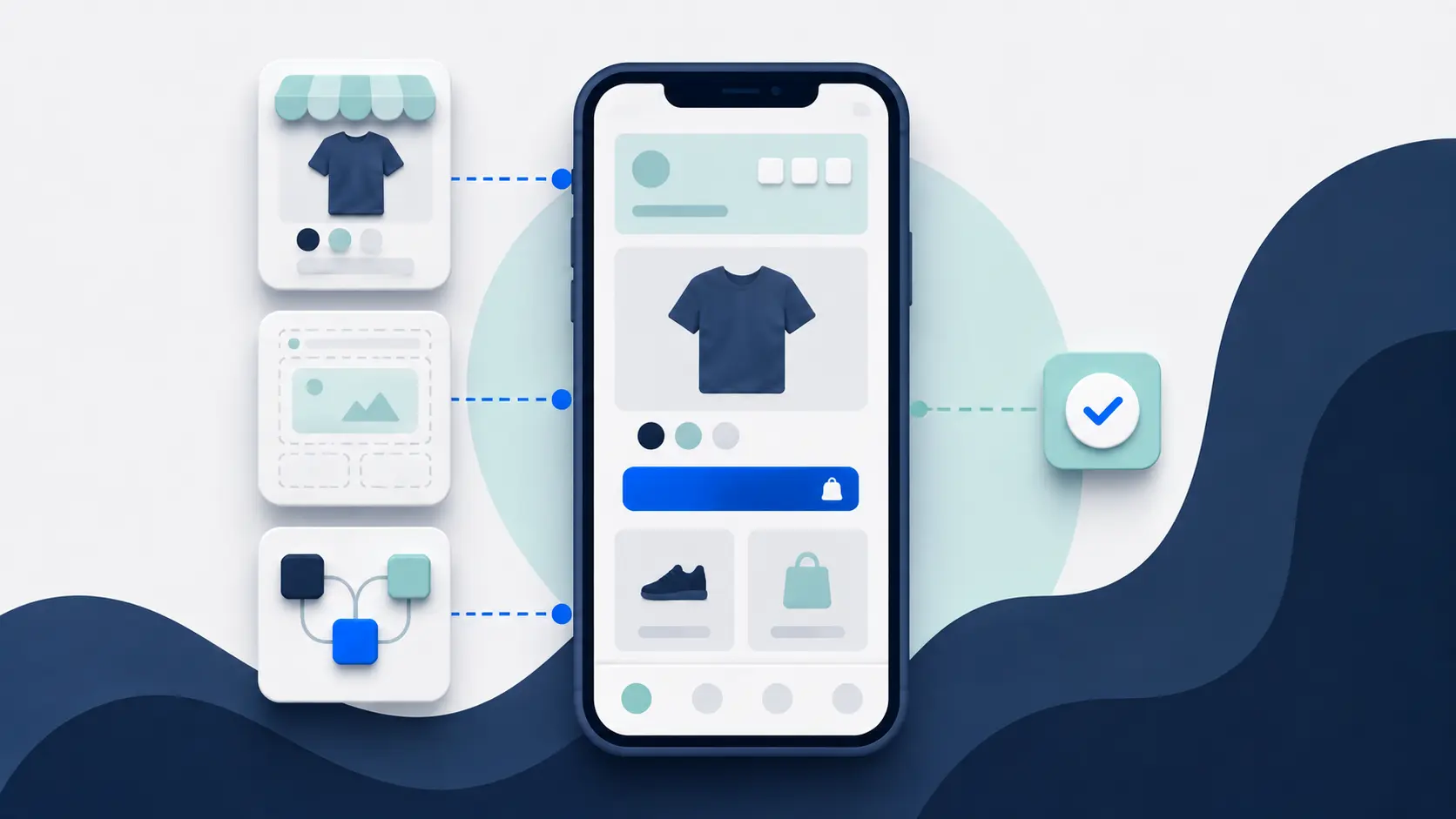
Most ecommerce apps have two main parts.
The first is the customer-facing app. This is the interface shoppers see on their phone, including the homepage, product pages, navigation, cart, account area, and app-specific features.
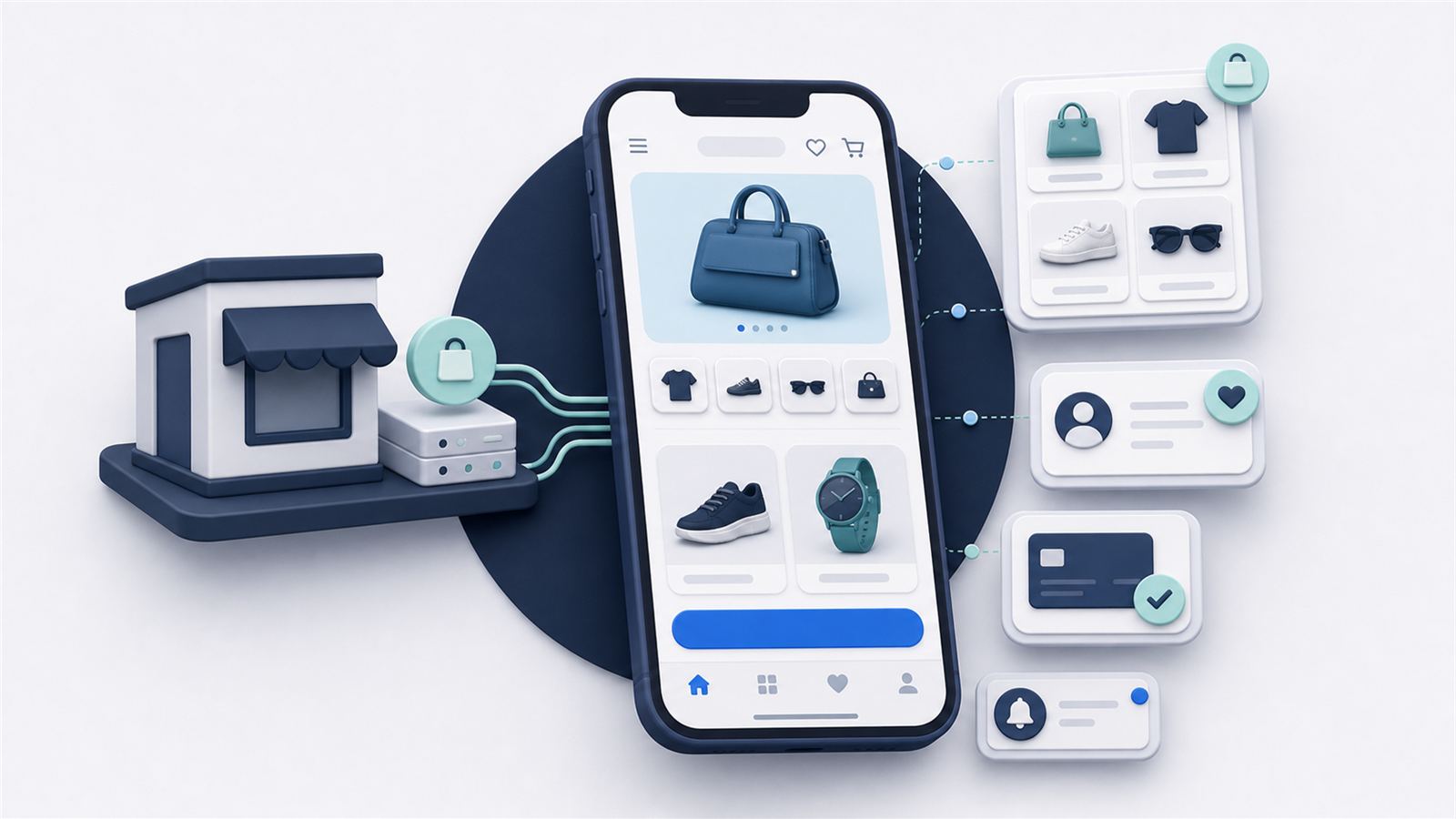
The second is the connection to the ecommerce backend. This keeps products, pricing, stock, customer information, orders, and checkout synchronized with your website.
When your brand changes a price or adds a product in Shopify, WooCommerce, BigCommerce, or another ecommerce platform, that change should also appear in the app. When a customer places an order in the app, the order should flow into the same order-management process as a website purchase.
That shared backend is what makes an ecommerce app practical to operate. Without it, your business would need to maintain separate catalogs, accounts, inventory, promotions, and order systems.
What Customers Can Do in an Ecommerce App
The exact experience varies by brand, but a typical ecommerce app lets customers:
- Browse products and collections
- Search and filter the catalog
- View product information, reviews, and availability
- Add products to a cart or wishlist
- Sign in and manage their account
- Use loyalty points, subscriptions, or membership benefits
- Complete checkout using familiar payment methods
- Track orders and view purchase history
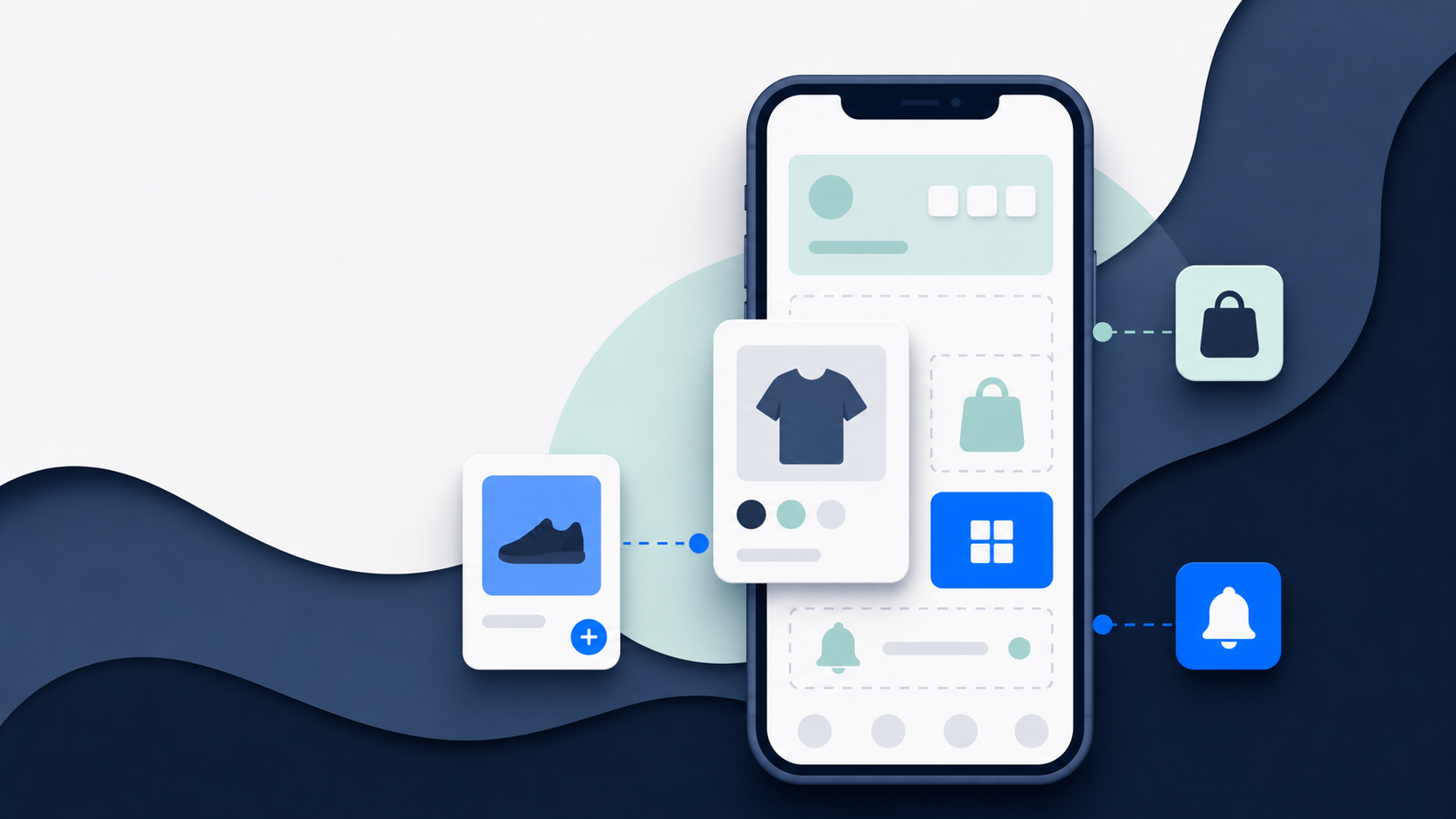
- Receive back-in-stock, price-drop, and promotional notifications
- Open a specific product or offer directly from a notification
The best apps do not simply reproduce your website in a smaller window. They make repeat shopping faster and give customers useful reasons to keep the app installed.
Ecommerce App vs Mobile Website
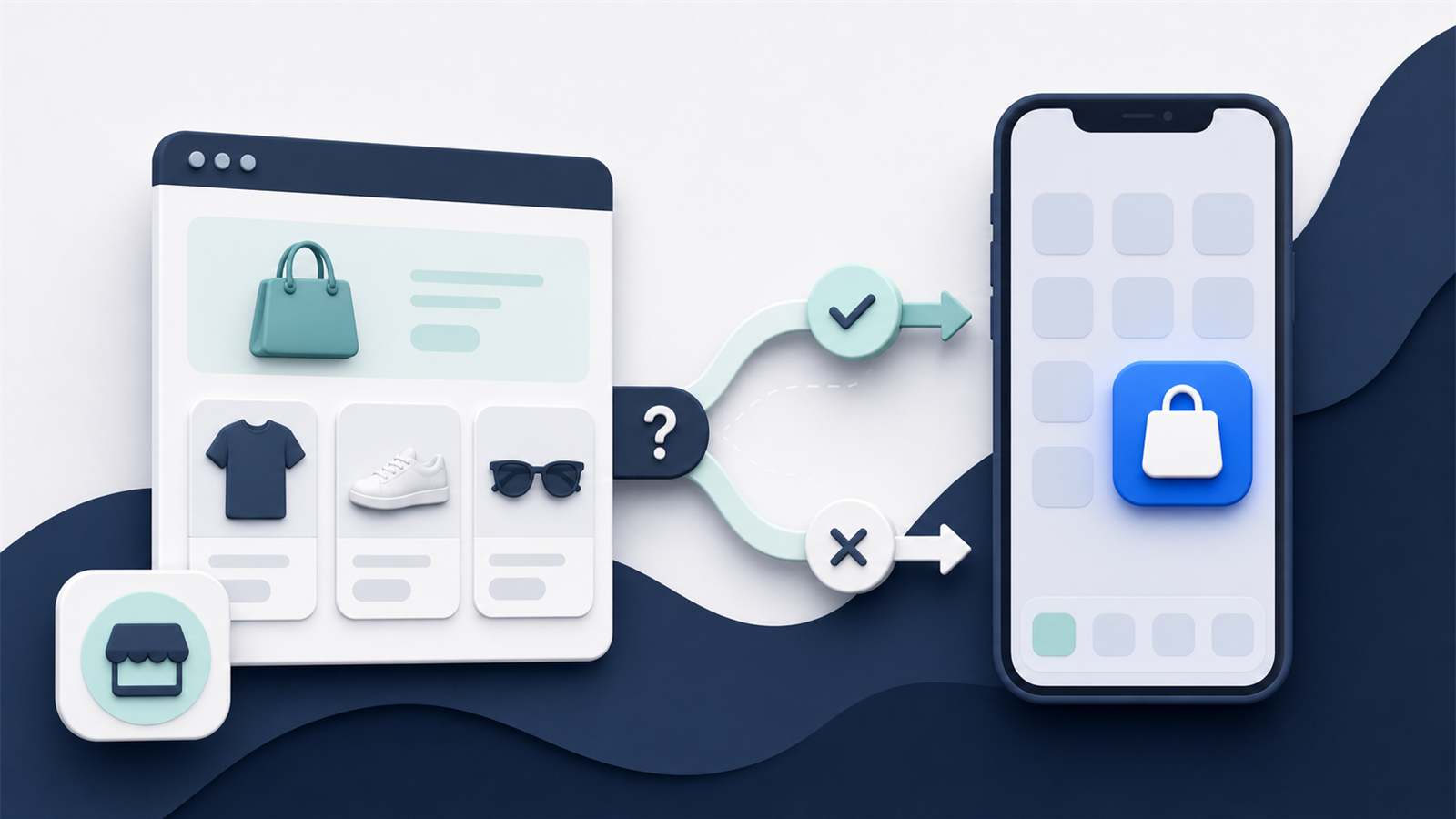
A mobile website runs in a browser. A customer reaches it through a search result, advertisement, email, social post, bookmark, or typed address.
A mobile app is installed on the device and launched from the home screen. That difference creates several practical advantages.
An app can send push notifications, retain a signed-in state more reliably, use native navigation patterns, support deep links, and make repeat access easier. It can also create a stronger sense of membership and direct connection with your brand.
The mobile website still matters. It remains the main destination for discovery, first visits, and shoppers who do not want to install anything. An app normally complements the mobile website rather than replacing it.
Ecommerce App vs Marketplace App
An ecommerce app belongs to one brand or retailer. Your business controls the experience, customer relationship, merchandising, and communication.
A marketplace app, such as Amazon or a delivery marketplace, brings many sellers together under the marketplace’s brand. It may provide reach, but the marketplace controls much of the customer experience and owns the primary relationship.
A branded ecommerce app is an owned channel. Your brand is not competing for attention inside another company’s interface every time a customer opens it.
What Makes an App Native?
The word “native” is used loosely in mobile app marketing.
Strictly speaking, a native app is built specifically for an operating system using its preferred technology. An iOS app and an Android app may therefore have separate codebases.
In ecommerce, many downloadable apps use a cross-platform or hybrid architecture. They still install from the app stores, can use native device features, and can provide native navigation, but some parts of the experience may share code or display web content.
The architecture matters, but it is not the only measure of quality. A technically pure native app can still be slow or difficult to use. A well-built hybrid app can feel fast and polished while preserving important website functionality.
For buyers, the better questions are practical:
- Does the app feel responsive?
- Does it support your store’s existing functionality?
- Can it use the mobile features your brand needs?
- Is it straightforward to maintain?
- Can the provider explain which parts are native, web-based, or shared?
Why Ecommerce Brands Build Mobile Apps
Most brands don’t launch an app because their website is not good enough, or because they’re having trouble getting customers. They launch one to improve the relationship with returning customers.
An installed app gives your brand:
- A place on the customer’s home screen
- A direct communication channel through push notifications
- Faster access for repeat shoppers
- A persistent signed-in experience
- A surface for loyalty, membership, and app-only benefits
- More control than a marketplace or social platform provides
This makes apps most useful for brands with an existing customer base and a reason for people to shop repeatedly.
Does your ecommerce brand need a mobile app? Find out here.
What an Ecommerce App Does Not Solve
An app is not a shortcut around a weak product, poor mobile website, low traffic, or unclear retention strategy.
Customers still need a reason to download it. Your brand still needs to promote it. The shopping experience still needs to be good. Push notifications still need to be useful rather than intrusive.
An app can strengthen an established ecommerce business, but it does not create demand on its own.
How Ecommerce Apps Are Built
There are several viable routes:
- Build separate native apps for iOS and Android.
- Build one cross-platform app using shared technology.
- Use an ecommerce app builder with a visual editor and prebuilt integrations.
- Use a managed app service that handles design, configuration, publishing, and maintenance.
- Build on the existing mobile website inside a native app framework.
The right approach depends on your store’s budget, timeline, existing technology, design requirements, and internal technical resources.
Final Thoughts
An ecommerce mobile app is a branded, downloadable shopping channel connected to an online store’s existing systems.
The app gives a brand a direct route back to its most engaged customers and gives those customers a faster way to return, browse, and buy.
For the right ecommerce business, that can make the app one of its most valuable retention channels.