The most useful Shopify mobile app examples aren’t necessarily the ones with the most elaborate design. They’re the ones with a clear reason to exist on a customer’s phone.
Some offer early access to products. Others turn push notifications into a dependable retention channel. A few become the primary way mobile-first customers shop.
This article looks at seven live apps connected to Shopify stores. The point isn’t to copy their home screens. It’s to understand the job each app does for the business and the patterns you can apply to your own.
What the Best Shopify Mobile Apps Have in Common
Strong ecommerce apps usually do three things well.
First, they make shopping easier. Product discovery, filtering, wishlists and checkout need to feel at least as good as the mobile website. An app that adds friction won’t earn repeat visits simply because it has an icon on the home screen.
Second, they give customers a reason to install. Early access, app-only products, loyalty benefits, saved preferences and timely restock alerts all create value that a responsive website can’t deliver in quite the same way.
Third, they fit the store’s existing operation. Products, inventory, customer data and orders stay connected to Shopify. The merchandising and retention teams can run the channel without rebuilding every campaign by hand.
The seven examples below emphasize different parts of that formula. The accompanying images are brand-supplied App Store screenshots, with notes on the specific patterns to study. Promotions shown may differ from current offers. Select an image to view it at a larger size.
1. Princess Polly Makes the App Its VIP Channel
Princess Polly’s app isn’t presented as a smaller version of its fashion website. It’s positioned as the best place for highly engaged customers to see new arrivals, get outfit inspiration and receive exclusive access.
The brand uses app-only sales, early product releases and push notifications to make that position credible. Its integrations also matter. Tapcart’s case study describes segmented messages through Klaviyo, product recommendations powered by Nosto and shoppable video content from Tolstoy.
Those features support the same promise: if you care about what Princess Polly launches next, the app keeps you closer to it.
Tapcart reports a 98.4% in-app retention rate for Princess Polly. Treat that as a vendor-reported case study figure rather than a general benchmark, but the strategic lesson is clear. Retention comes from recurring value, not the initial download campaign.
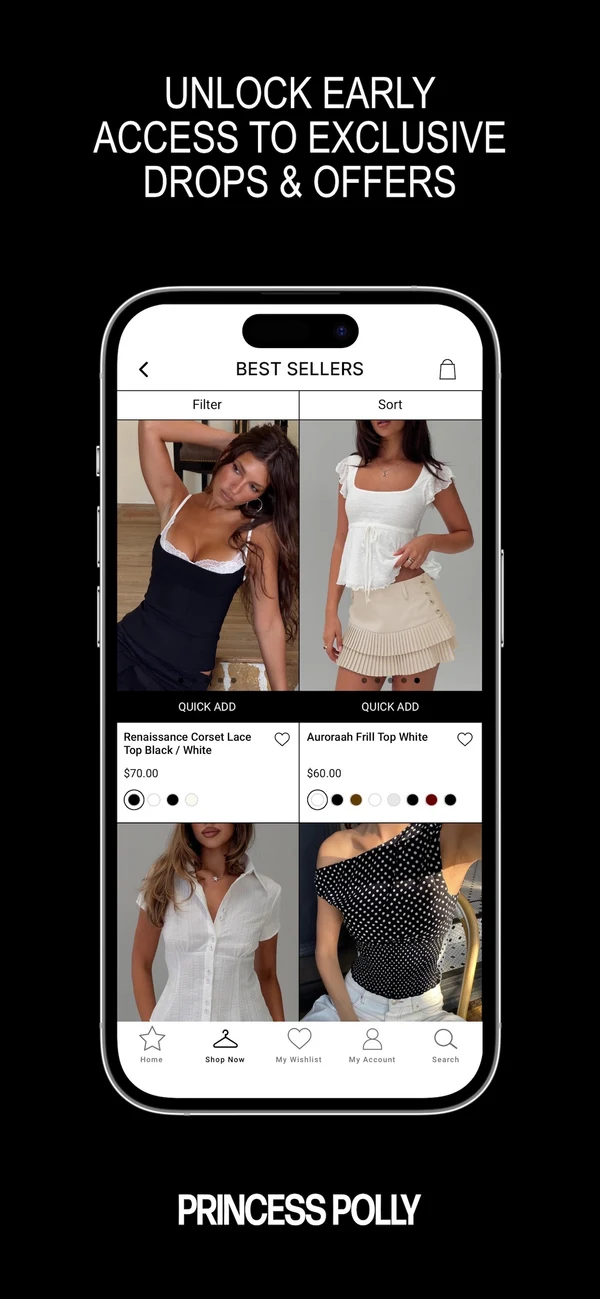
Early access The listing states the install benefit above the shopping experience.
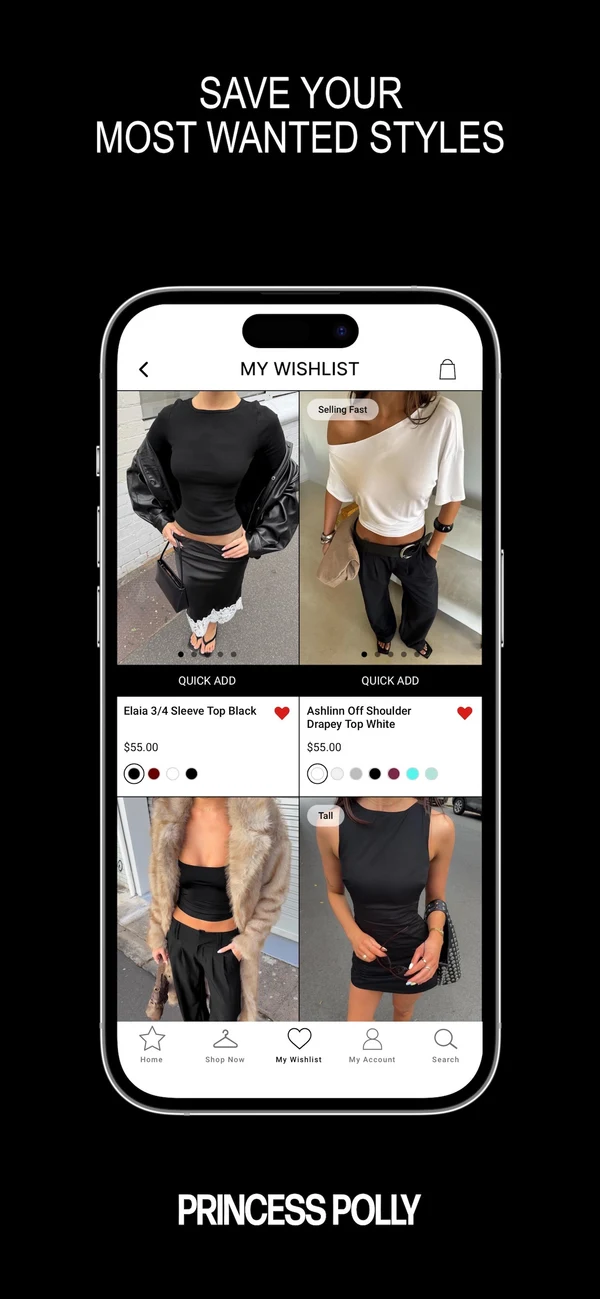
Saved intent A wishlist gives returning customers a direct route to the styles they already want.
What to Copy From Princess Polly
Build the app around your best customers. Give them first access, useful personalization and fresh content. Then market those benefits consistently across the website, email, SMS and social channels.
Don’t hide the reason to download behind a generic “shop our app” message. State the advantage plainly.
2. BÉIS Uses Launch Access to Keep Infrequent Buyers Close
BÉIS sells travel products. A customer may love the brand without needing a new suitcase every month, so the app has to maintain interest between naturally infrequent purchases.
The brand does that with launch access, restock notifications, app exclusives and a polished catalog experience.
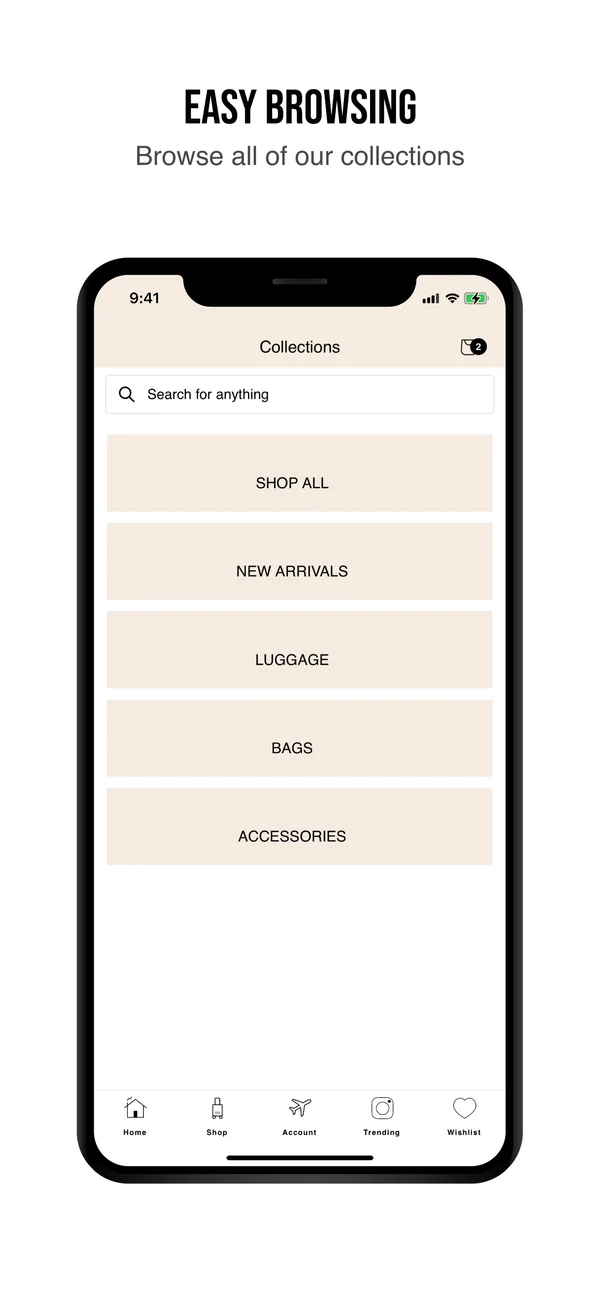
Clear browsing Search and a short collection menu make the catalog easy to enter.
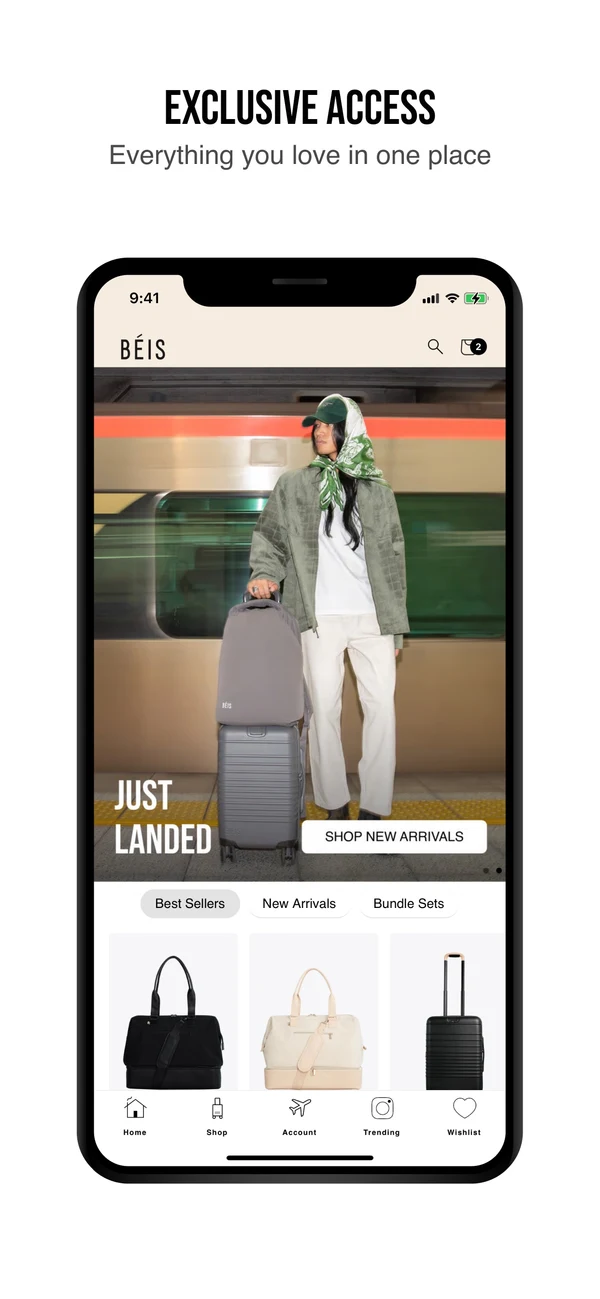
A reason to return The launch campaign connects the access promise to a clear shopping destination.
The App Store screenshots lead with “easy browsing,” “exclusive access” and “best sellers.” That order is useful. It communicates everyday utility first, then the retention hook.
In its case study, Tapcart reports that the BÉIS app produced a 67% higher conversion rate than the mobile site, a 19% higher average order value and 13% of total US revenue. The important part isn’t the exact percentages. It’s that BÉIS measures the app as a commerce channel and a relationship channel.
What to Copy From BÉIS
If your purchase cycle is long, don’t force artificial shopping frequency. Use the app to help customers catch launches, track restocks and stay connected until they have a genuine reason to buy again.
Your store listing should also explain that value quickly. Prospective users shouldn’t need to read a long description to understand why the app deserves space on their phone.
3. BrüMate Turns Push Notifications Into a Revenue Channel
The BrüMate app sells drinkware, coolers and related products through a straightforward branded shopping experience. Its more interesting lesson sits outside the interface.
Tapcart reports that app-based push notifications generate 10% to 20% of BrüMate’s monthly revenue. That makes push a real channel with a measurable contribution, not a box checked during the app build.
Push works particularly well for a product business with frequent color releases, limited stock and seasonal demand. A message about a new collection can reach opted-in customers immediately and send them to the relevant app screen.
The danger is overuse. Notifications lose value when every routine promotion is treated as urgent. BrüMate’s example is worth studying because the product cadence gives the channel a natural job.
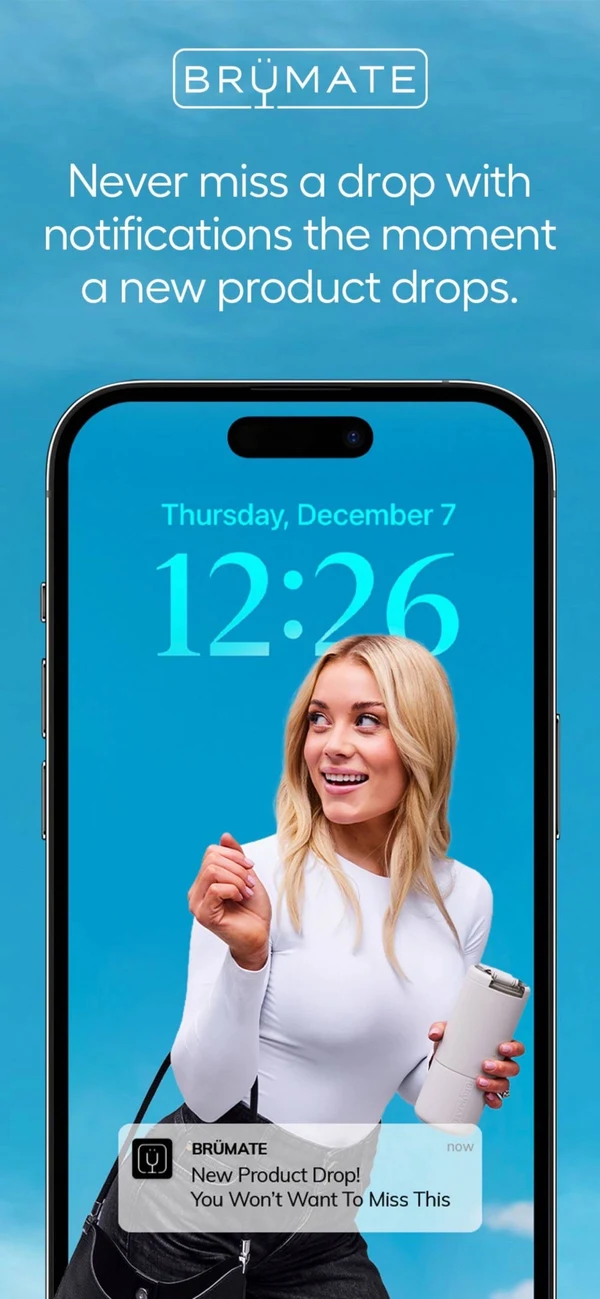
A product-drop reminder The brand illustrates the value of opting in: finding out when something new arrives.
What to Copy From BrüMate
Define notification categories before launch. New drops, restocks, price changes and order updates are easier for customers to understand than a stream of unrelated promotions.
Measure revenue, sessions, opt-outs and repeat purchases by message type. That tells you whether push is building a useful habit or just borrowing attention.
4. Oh Polly Acquires App Users After the First Purchase
Many app plans focus almost entirely on the first install. Oh Polly also treats the moment after a web purchase as an acquisition opportunity.
The customer has just demonstrated intent, created an account and experienced the brand. Oh Polly follows up through post-purchase touchpoints and offers a reason to move into the app, where push notifications and app exclusives can support the next purchase.
That approach is more precise than asking every first-time visitor to install immediately. It targets people who have already crossed the biggest trust barrier.
Oh Polly also makes the app meaningfully different during major campaigns. Tapcart’s case study describes a Black Friday promotion with an additional discount for customers who shopped in the app. Its 2025 awards report says the app generated a 142% higher conversion rate and 25% higher average order value than web.
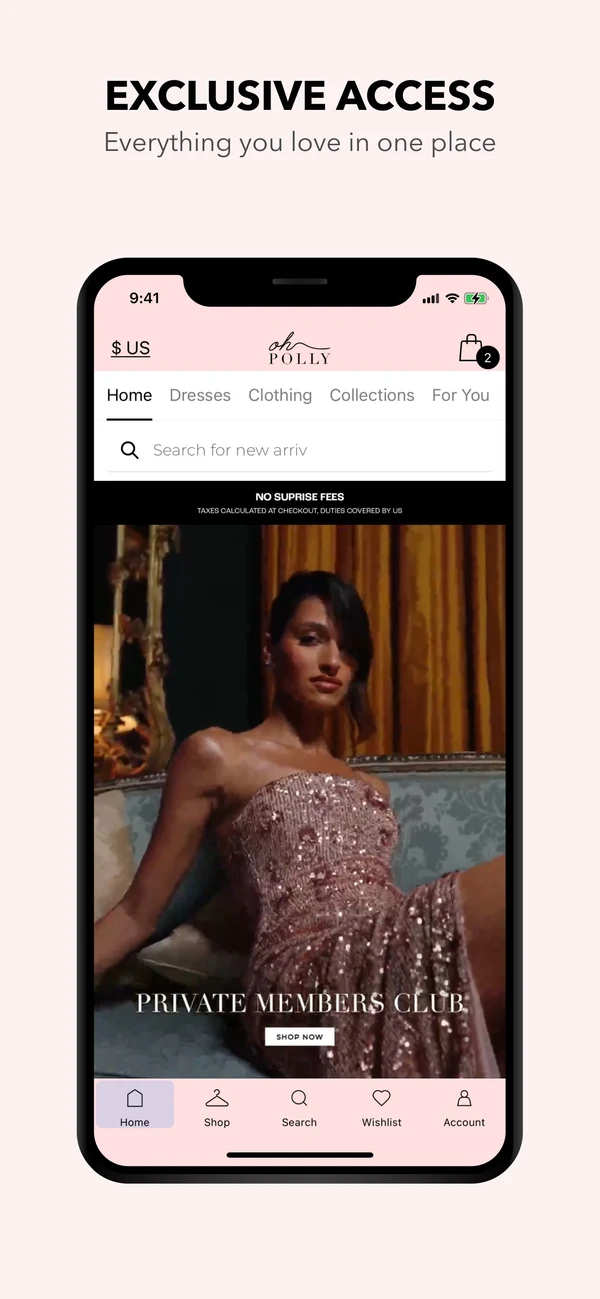
Membership value The Private Members Club message gives the app a visible exclusivity story.
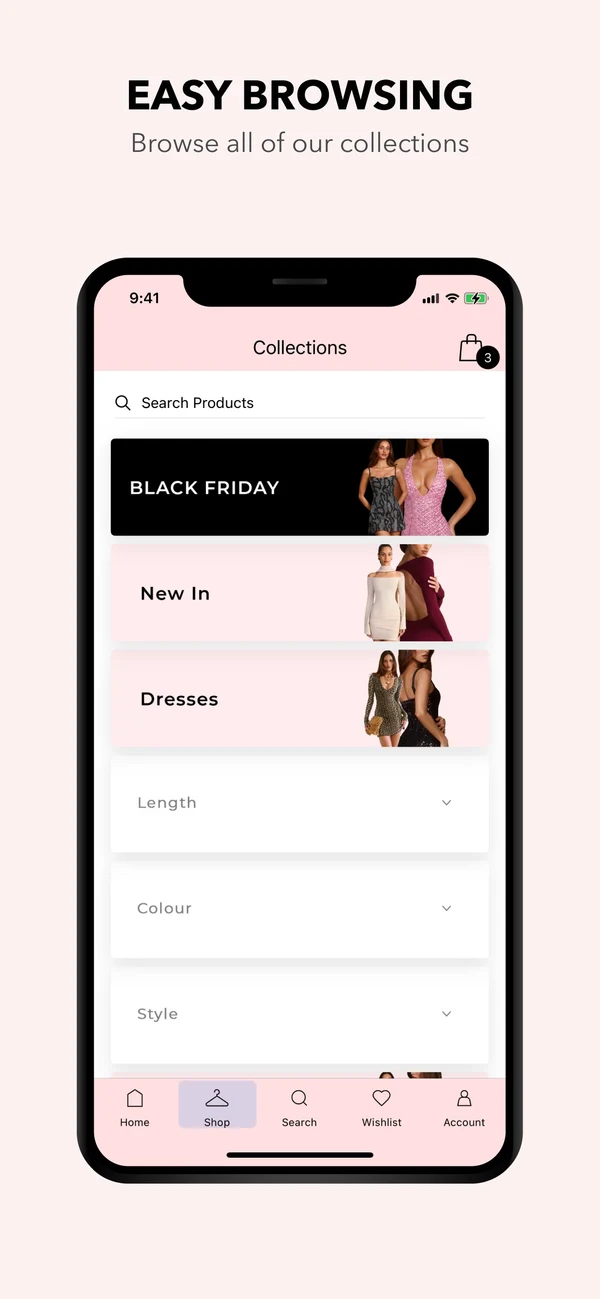
Campaign discovery A seasonal collection sits beside practical ways to browse.
What to Copy From Oh Polly
Add app acquisition to the post-purchase journey. Test it in the order confirmation page, account area, email flow and package inserts.
The incentive doesn’t always need to be a discount. Early access, easier order tracking or loyalty benefits can attract the right users without training them to wait for a coupon.
5. Girls With Gems Connects the App to a Unified Shopify Stack
Girls with Gems is a useful example because the app isn’t an isolated project. Shopify’s case study places it alongside Shopify Plus, Flow and POS as part of the retailer’s operating system.
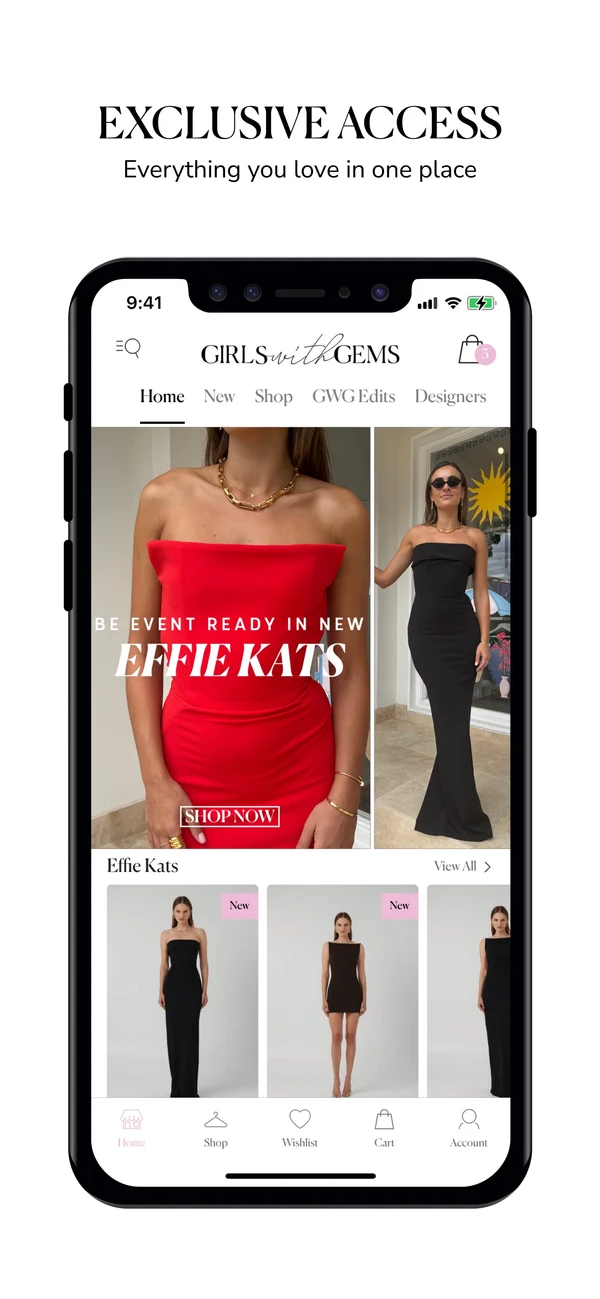
Editorial merchandising A campaign image leads directly into the featured designer’s products.
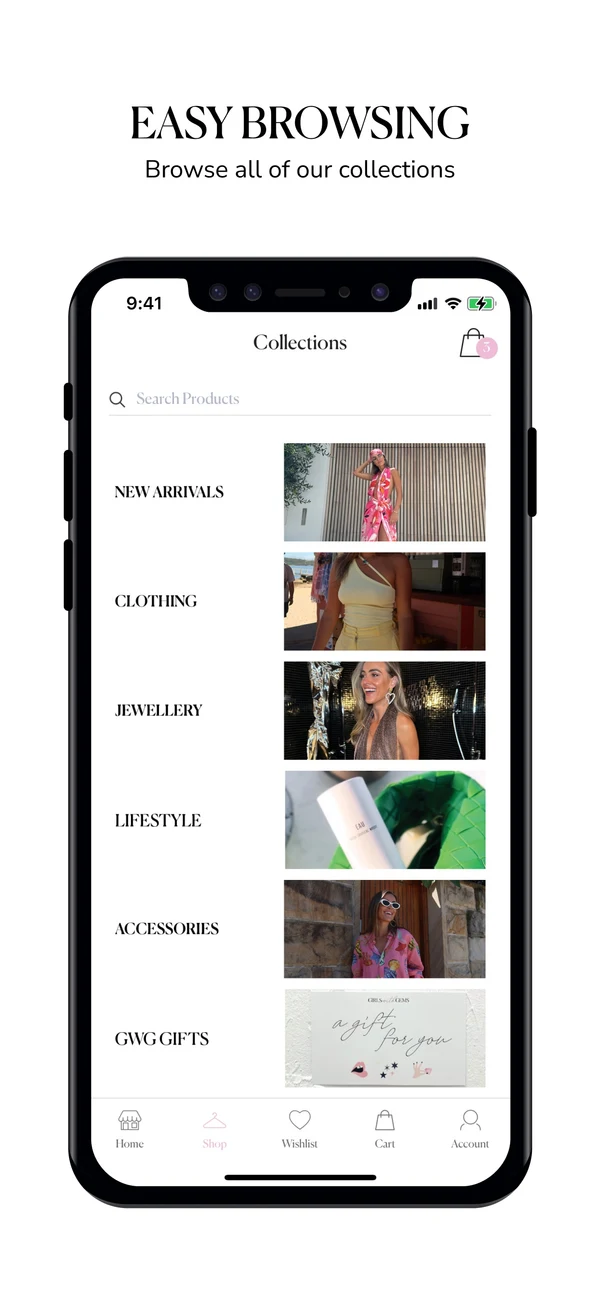
Visual navigation Category photography preserves the boutique’s look while helping customers browse.
Customers can browse the boutique’s mix of brands, get app-only access and share products. Behind that experience, the business can keep products, inventory, customer records and orders connected to the same Shopify operation used by the website and physical store.
That shared foundation matters more than it looks. A beautiful app becomes expensive to run if the team has to reconcile stock, campaigns and customer activity across disconnected systems.
What to Copy From Girls With Gems
Map the operational flow as carefully as the customer screens. Decide which system owns products, inventory, customer identity, loyalty, returns and reporting.
An app should add a channel without creating a second ecommerce business for your team to administer.
6. Libas Built Its App for a Mobile-First Market
Libas shows what happens when mobile isn’t a secondary channel. Shopify reports that more than 80% of the fashion brand’s traffic comes from mobile and that its branded app, connected through Shopify’s APIs, became its top revenue channel.
The Libas app supports a broad ethnic-wear catalog with curated collections, celebrity lookbooks, size guidance, new drops and outfit inspiration. Those aren’t decorative extras. They help customers navigate a visually rich and choice-heavy category from a small screen.
This example also broadens the usual US-centric view of Shopify apps. In markets where smartphones are the primary way customers access ecommerce, the app can be a central storefront rather than a loyalty add-on.
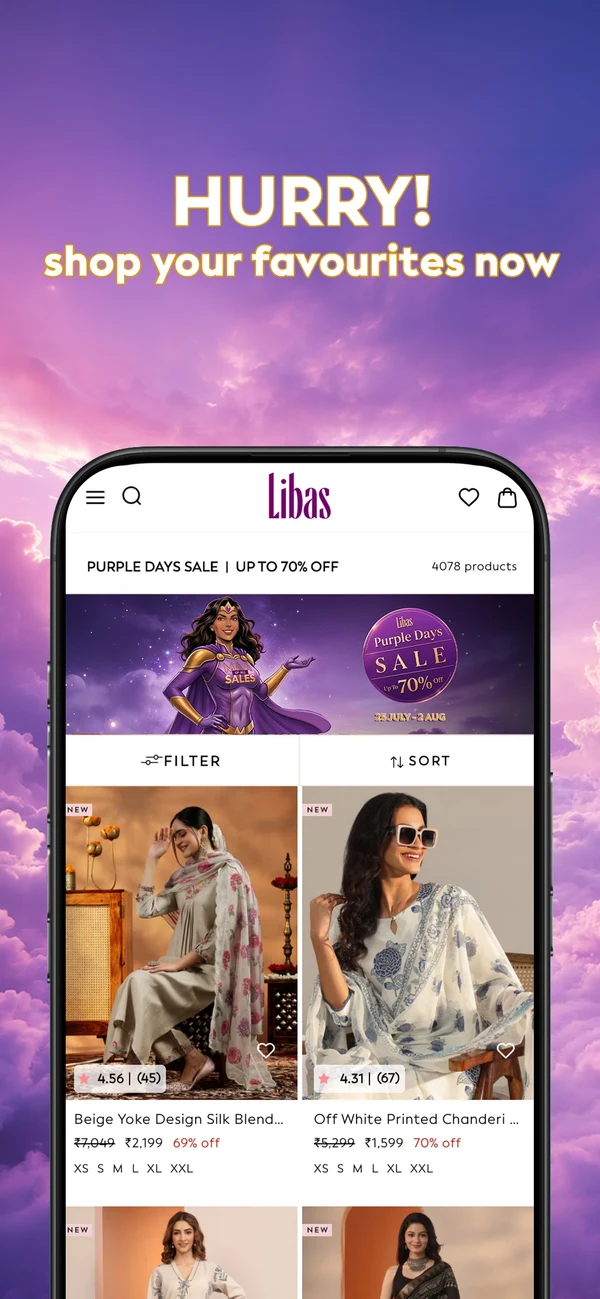
Product discovery on a small screen Visible size labels, ratings and prices help shoppers compare options. Filter and Sort controls give them ways to narrow a large catalog.
What to Copy From Libas
Use your own traffic and customer behavior to set channel priority. If most customers already shop on mobile, don’t design the app as a reduced desktop experience.
Invest in discovery, localized content, relevant payments, shipping visibility and performance on the devices and connections your customers actually use.
7. 707 Street Makes Exclusivity Useful for Collectors
707 Street sells licensed pop-culture merchandise, including products where timing and availability matter. Its app promises easy browsing and first-to-know notifications for exclusive offers.
That combination fits collector behavior. An alert about an exclusive or limited product has obvious utility when the item might sell out. The 707 Street app doesn’t need a radically different catalog to earn attention. It needs to make access faster and more dependable.
Shopify’s case study reports that the app converts 38% better than the website and drives just over a quarter of the company’s revenue. Again, the numbers are specific to one business. The transferable lesson is the alignment between product scarcity, customer motivation and the app’s retention tools.
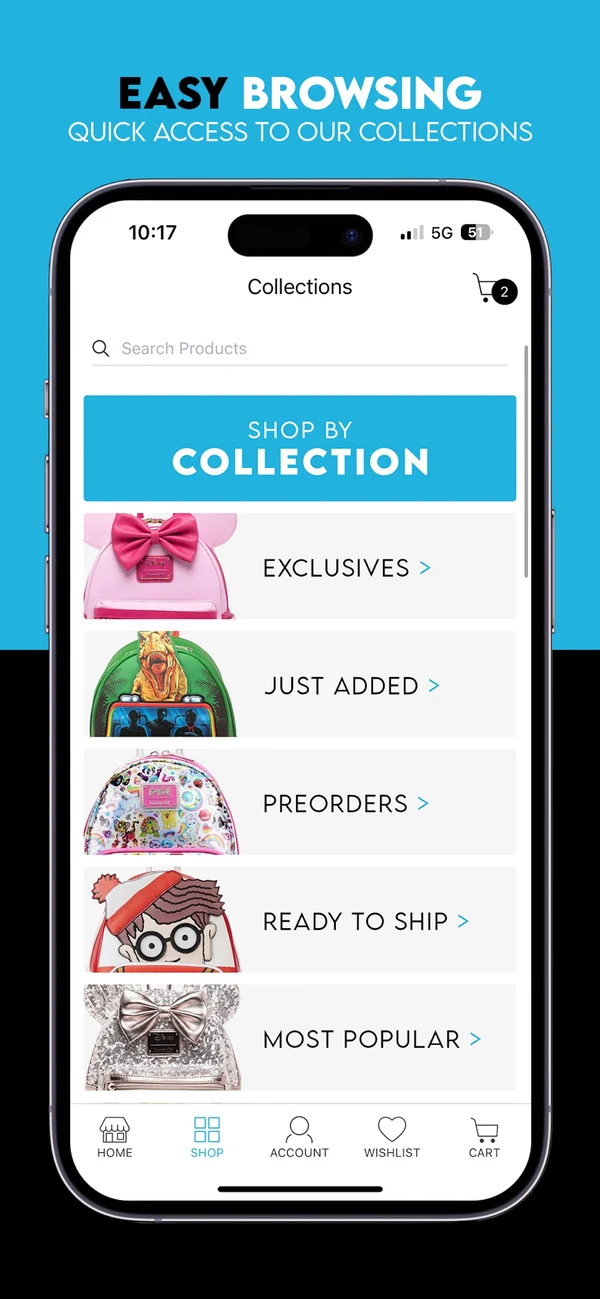
Availability first Exclusives, preorders and ready-to-ship categories reflect how collectors shop.
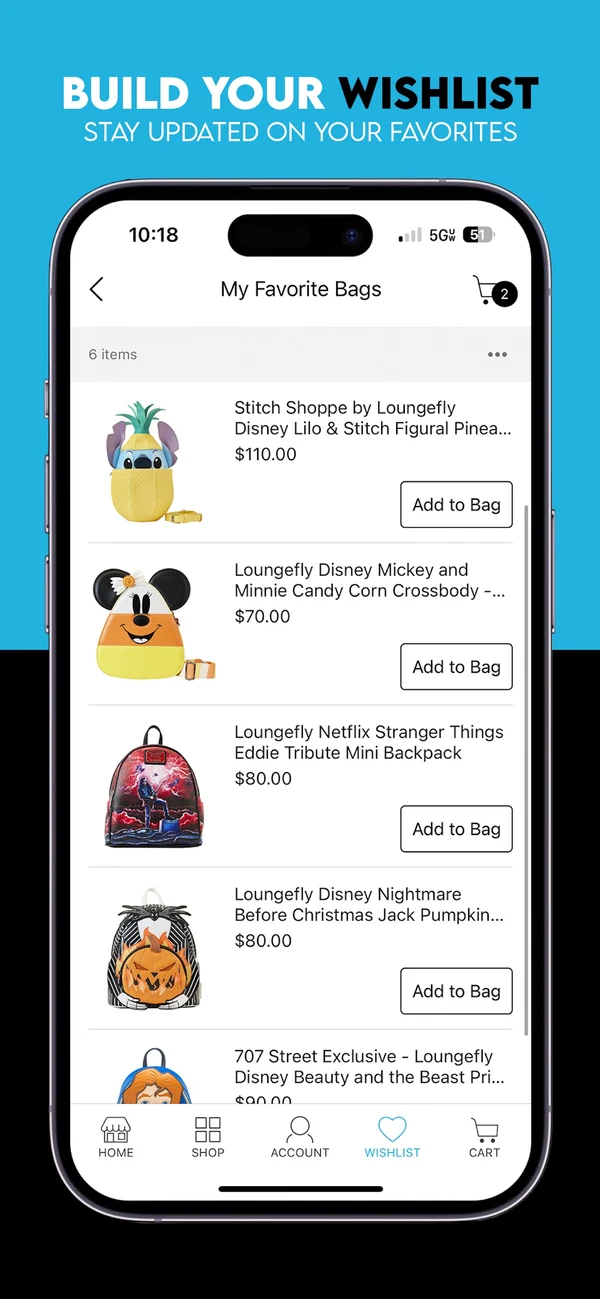
Keep favorites close Saved products have a clear route back to the bag when the customer is ready.
What to Copy From 707 Street
If customers care about limited inventory, make alerts specific and actionable. Let people know what launched, why it’s relevant and where to find it.
Connect wishlist and back-in-stock behavior where possible. A generic broadcast is less useful than an alert tied to something the customer has already shown interest in.
The Patterns Worth Copying
These apps look different, but the strongest ideas repeat.
Give the App a Job Beyond “Mobile Shopping”
Princess Polly and Oh Polly use exclusivity. BÉIS maintains the relationship between purchases. BrüMate activates product launches through push. 707 Street helps collectors act quickly.
Your app’s job should be specific enough to guide product decisions and marketing. “Increase loyalty” is an outcome. “Give repeat customers first access to weekly drops” is a product strategy.
Design for the Customers Most Likely to Install
An app usually serves a store’s most engaged segment first. That affects navigation, content, login, loyalty and merchandising.
New visitors may need education. Existing customers may want speed, saved details and immediate access to what’s new. Trying to satisfy both groups with the same generic home screen can weaken the experience for each.
Make Exclusivity Operationally Sustainable
App-only value needs a repeatable process. Decide who plans the calendar, builds the landing experience, schedules the push campaign and measures results.
If every exclusive requires custom development or last-minute coordination across teams, the strategy will fade after launch.
Keep Shopify as the Shared Commerce Backbone
The examples here use different tactics, but Shopify remains central to catalog, inventory, customers, orders or checkout. That connection reduces duplicate work and helps the app reflect the current state of the store.
Your loyalty, reviews, subscriptions, search and personalization tools also need an app plan. A Shopify connection alone won’t reproduce every feature on your website.
What Not to Copy Blindly
Case study results aren’t forecasts. App users are often a brand’s most loyal customers before they install, so higher conversion and order value don’t prove the interface caused the entire difference.
Don’t copy app-only discounts without calculating margin and channel shift. Don’t send frequent notifications because another brand reports strong push revenue. Don’t rebuild a complex loyalty experience if your customers barely use the web version.
Start with the customer behavior and commercial constraint you need to change. Then use these examples as patterns, not templates.
How to Choose the Right Examples for Your Store
Look for comparable businesses across four dimensions:
- Purchase frequency: weekly fashion drops create different app behavior from annual luggage purchases.
- Product discovery: a large visual catalog needs different navigation from a small focused range.
- Customer motivation: collectors value speed and scarcity, while replenishment customers may value subscriptions and reminders.
- Operating model: confirm that your team and app platform can run the features you want to copy.
The closest-looking brand isn’t always the best reference. A store in another category with the same purchase cycle and retention problem may teach you more.
Final Thoughts
The best Shopify mobile apps aren’t successful because they moved a product grid into a native shell. They give the right customers a faster, closer or more valuable way to interact with the brand.
Princess Polly makes the app feel like a VIP channel. BÉIS keeps customers engaged between purchases. BrüMate treats push as a measurable revenue source. Oh Polly recruits app users at the right moment. Girls with Gems connects the app to a unified operation. Libas treats mobile as the primary storefront. 707 Street makes timely access useful for collectors.
Choose the lesson that matches your business. A clear job for the app will do more for retention than a long feature list.
Shopify Mobile App Examples FAQs
Which Shopify Stores Have Mobile Apps?
Many Shopify and Shopify Plus stores run branded iOS and Android apps. The examples in this guide include Princess Polly, BÉIS, BrüMate, Oh Polly, Girls with Gems, Libas and 707 Street.
Do These Apps Use Shopify App Builders?
Several examples in this article use Tapcart, including Princess Polly, BÉIS and Oh Polly. Other brands use different vendors or custom integrations. The storefront’s visible design doesn’t always reveal the complete architecture, so evaluate the operating model as well as the UI.
What Should a Shopify Mobile App Include?
At minimum, customers need reliable product discovery, product details, cart, checkout, accounts and order visibility. The features that justify installation often include push notifications, wishlists, loyalty, early access, app exclusives and personalized content.
Are Mobile Apps Better Than Shopify Mobile Websites?
Not automatically. A mobile website is better for broad reach and first-time discovery. An app can be stronger for repeat customers, persistent login, push notifications and native features. Most established stores need the website either way.
How Should You Measure a Shopify App?
Track active users, repeat purchase rate, conversion rate, average order value, revenue per user, push opt-in and opt-out rates, retention and incremental revenue. Compare cohorts carefully so you don’t mistake highly loyal customers selecting into the app for an effect caused entirely by the app.